Specifications
As registered
Facts & History
Notes from the marque
By 1926, the Model T was in its final full season of an 18-year run that had already reshaped American life. Henry Ford's insistence on incremental refinement over redesign meant the car that closed out the T era still shared its bones with the runabouts of 1908 — but with real comforts the earliest buyers never had.
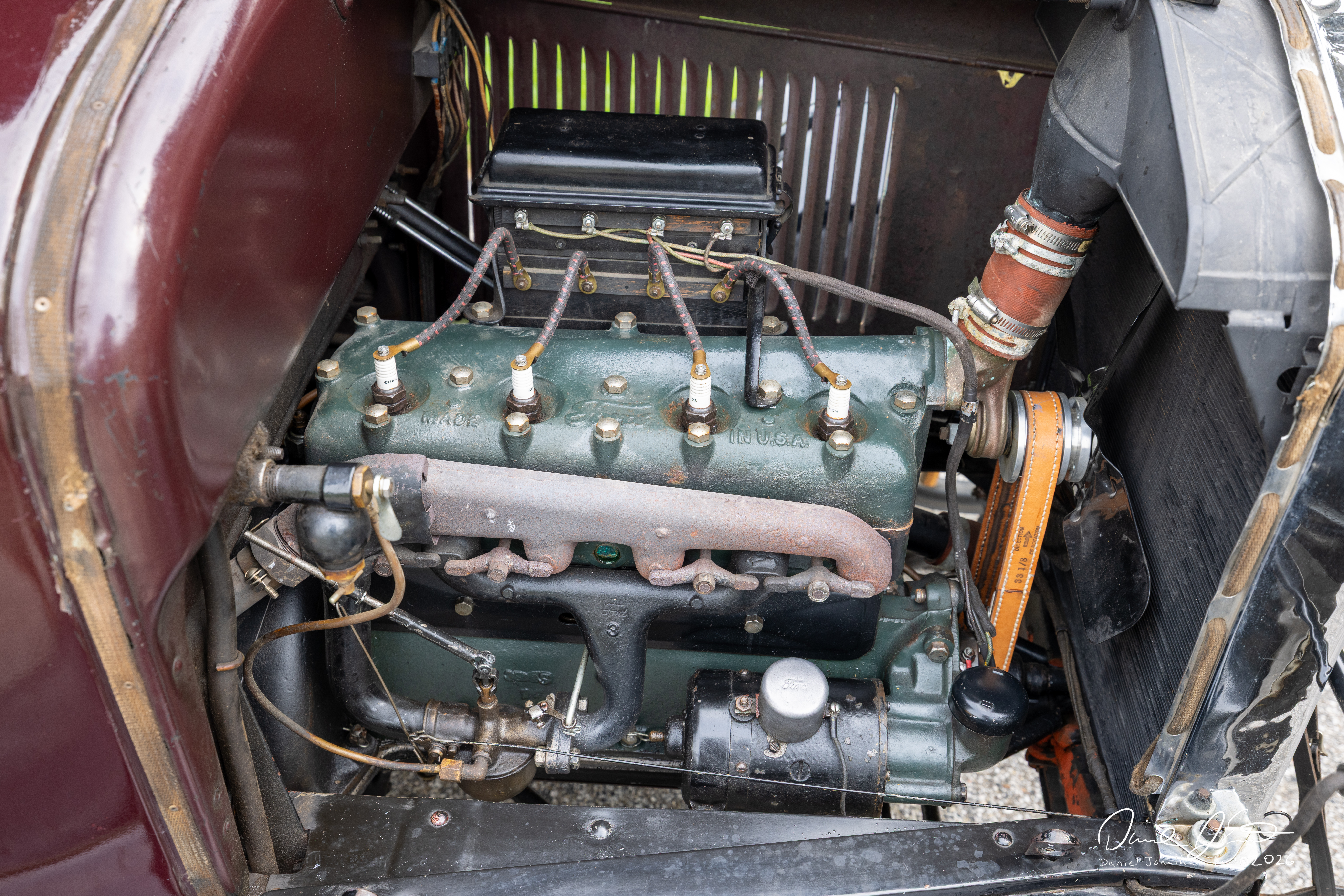
- Power comes from a 2.9-liter (176.7 cubic inch) inline four-cylinder L-head engine producing about 20 horsepower, paired with a three-speed planetary transmission — two forward speeds and reverse, operated by foot pedals rather than a hand-shifted gearbox.
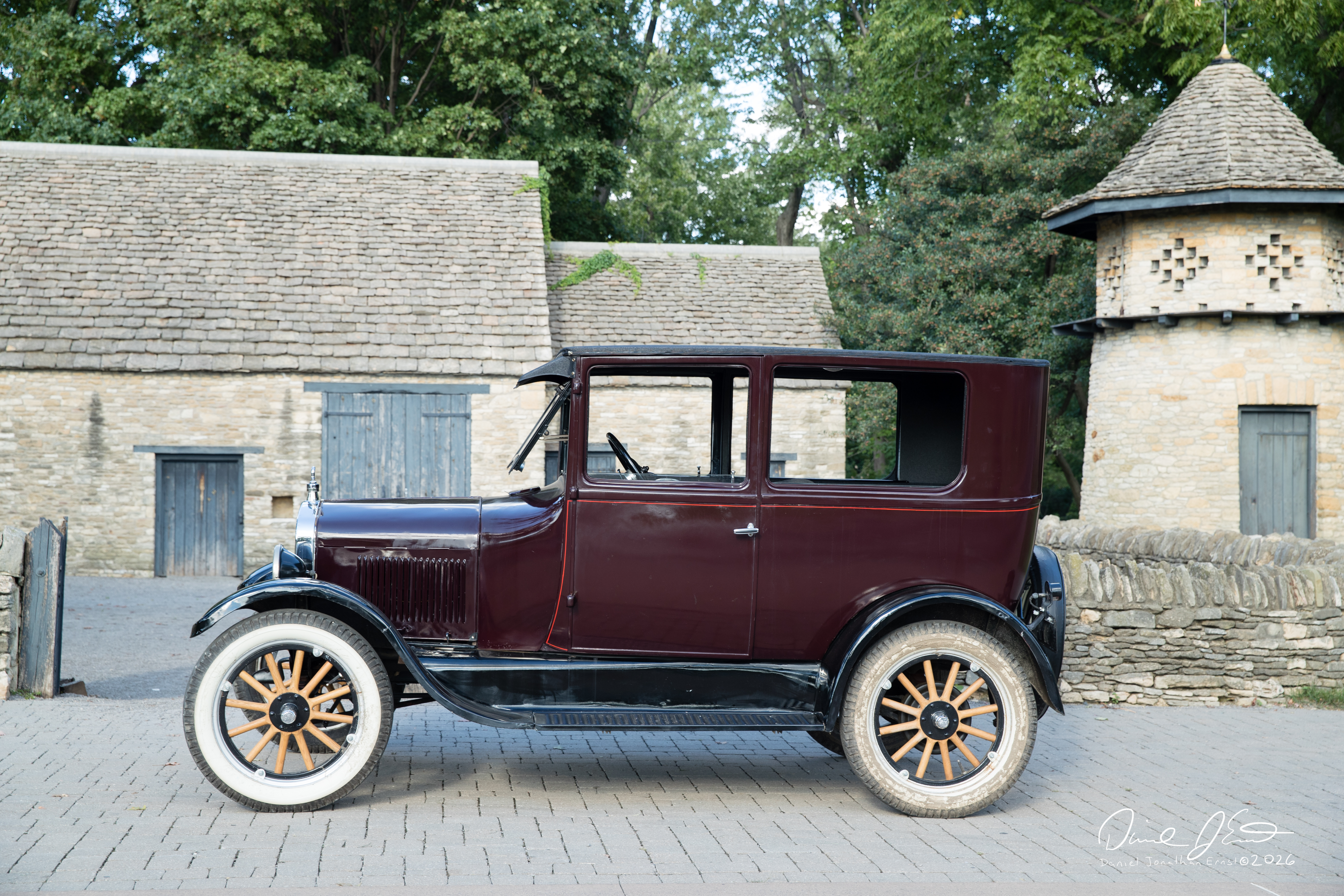
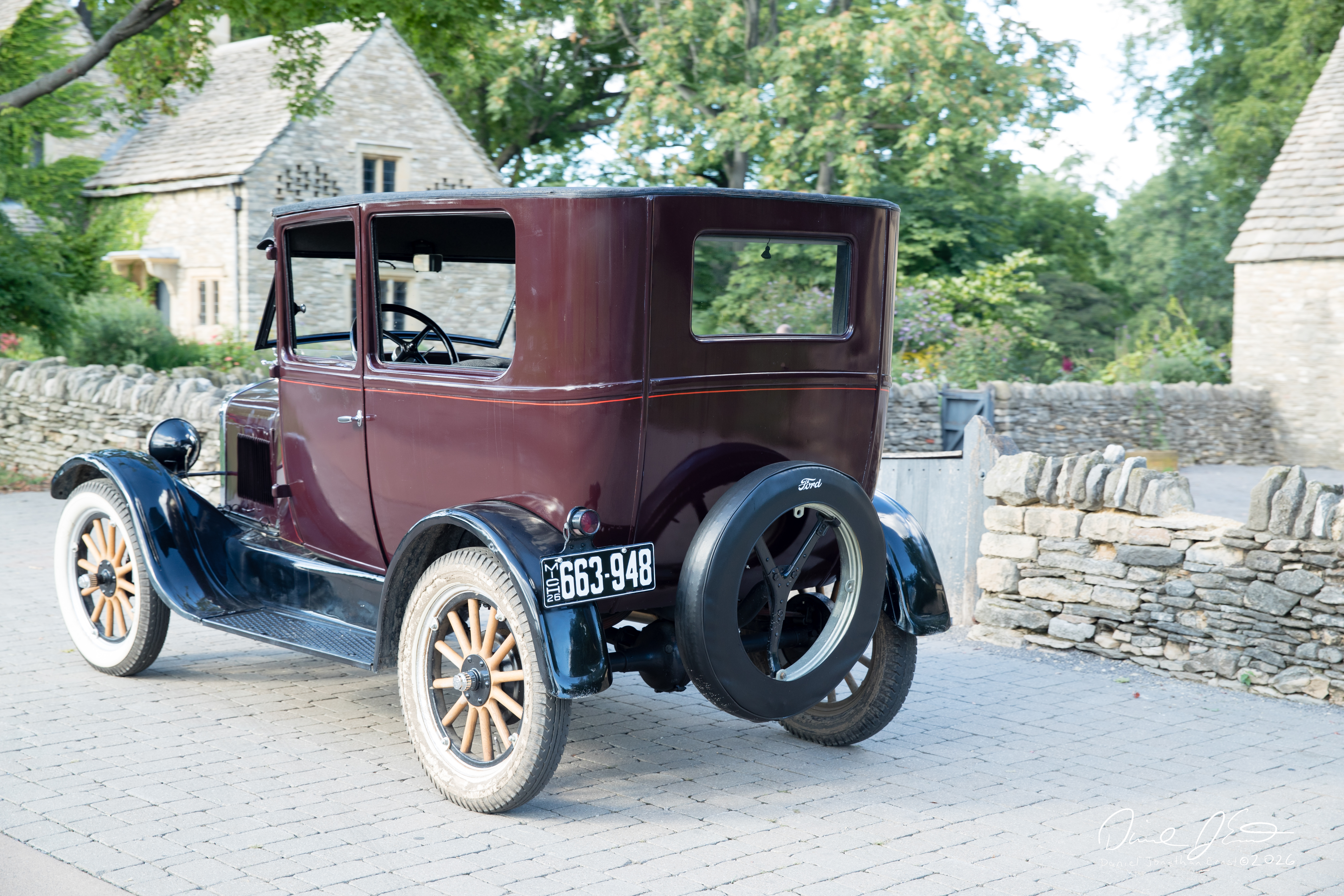
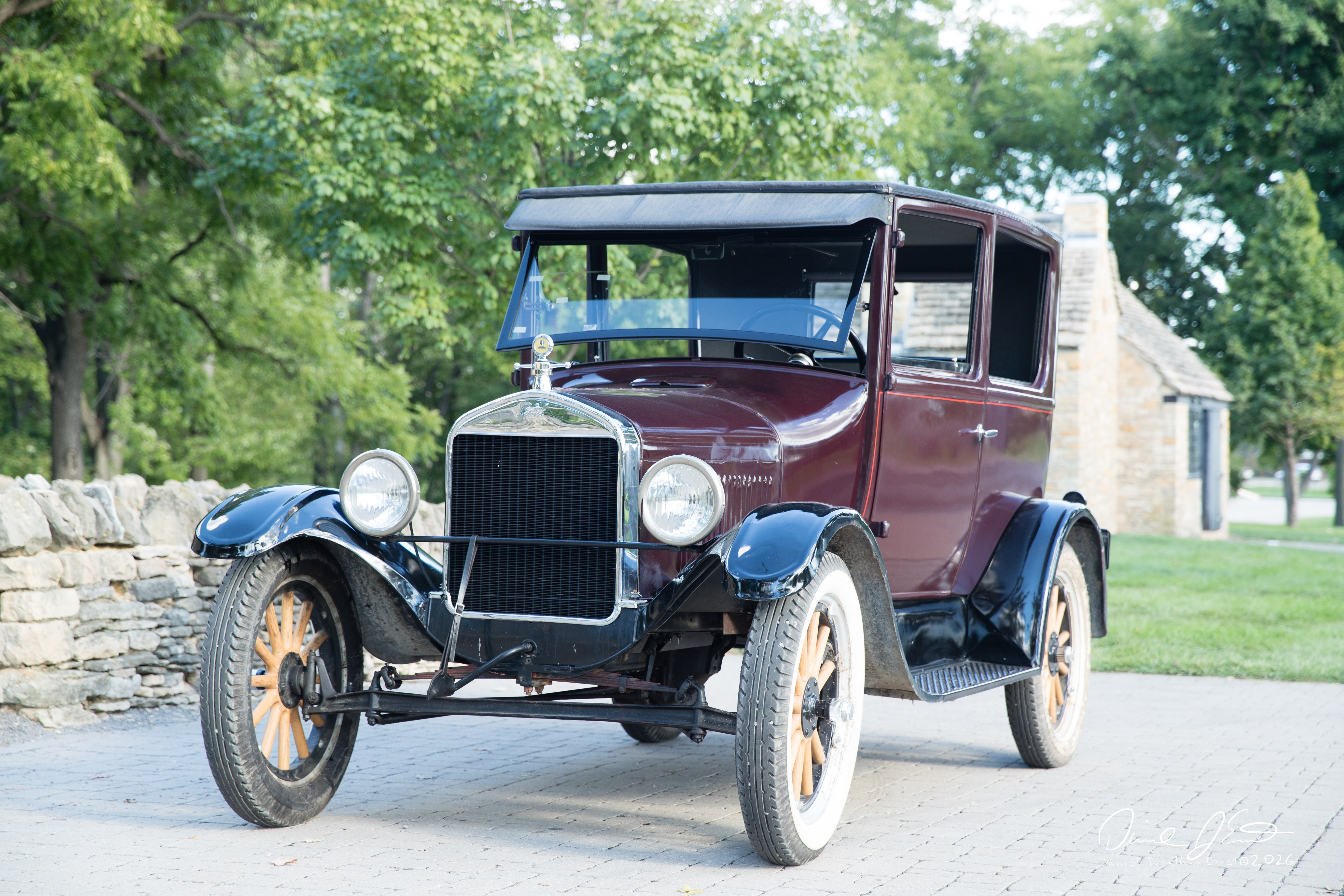
- The Tudor was Ford's two-door sedan body, offering enclosed, weatherproof seating for up to five — a significant step up in comfort from the open touring cars and roadsters that dominated the T's earlier years.
- Ford produced roughly 1.67 million Model Ts in the 1926 model year alone, out of more than 15 million built over the model's full run.
- 1926 also broke Ford's famous "any color so long as it is black" policy of 1913–1925, reintroducing a factory color palette in the Model T's final seasons.
- The Model T's rugged build and high ground clearance made it well suited to the unpaved roads still common across much of the country in the mid-1920s.
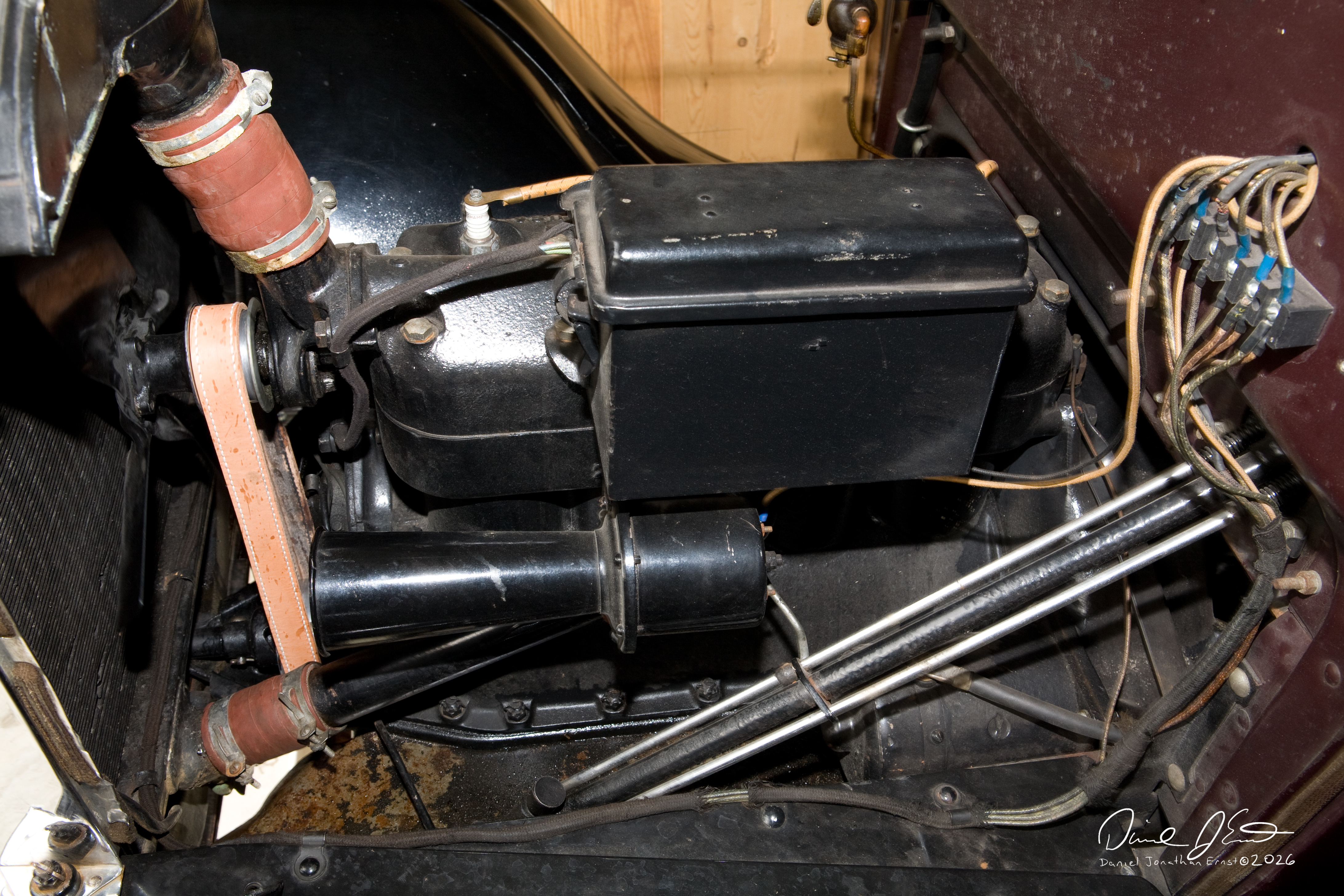
- The engine, serial number 13,761,050, was manufactured on May 27, 1926. (Numbers 13,754,808 to 13,762,312, a total of 7,504 engines, were built that day). The car was then assembled around that time. The frame number matches the engine number, which means this car has been together and complete from the beginning. When the engine was rebuilt in 2017 by Jack Putnam in Ohio, the original cast iron pistons, connecting rods, and camshaft were replaced, but the original crankshaft was overhauled and retained. You may see an original piston and other parts on display here. The car retains most of its other original hard parts, including transmission, frame, axles and springs, most body panels, wood floor and roof, and seat frames.
- The cost was $495 in 1926, which is roughly $7,000 today. I bought it in 2004 for about $8,000, and have invested about $10,000 more in maintenance and parts. There have been at least 7 owners.
- The first production Model T was built at the Piquette Plant in Detroit in the fall of 1908. Production rose quickly, and in 1910, after almost 12,000 were produced, Ford moved to Highland Park, where this car was assembled.
- Contrary to popular folklore, Model Ts were not all painted black. From 1908 up to 1914, cars were grey, green, blue and red. Black was not available. Then in 1914, black became the only original color of the Model T, in the interest of cheapest cost, highest durability, and quickest drying time. Then in 1926, due to pressure from the competition, Model Ts were offered once again in colors other than just black. The 1926 Tudor was initially available in only green, however, later in the year, maroon, and gray were added as options.
- By the end of 1925, the writing was on the wall for the Model T. Sales of the car were declining in number, and other car brands in the price category offered more luxury and styling. Henry Ford stubbornly held on to his beloved Model T for another couple years, allowing his engineers to "improve" the car, but not create a new model. Changes made the car lower, longer, heavier, more streamlined, and added some color.
- Wire wheels were not standard equipment on the Tudor until late 1926. Black wooden spoke wheels with demountable rims were standard equipment, with natural-finish wood as an option. Electric starter, hand-operated windshield wiper, rearview mirror, dash light, and nickeled radiator shell were standard equipment on all "closed" (non-convertible top) cars.
Driving the Model T
Driving the Model T well is somewhat of an art. Even though it's a very durable car, and very forgiving for beginners, the conscientious driver aspires to control it smoothly and with finesse.
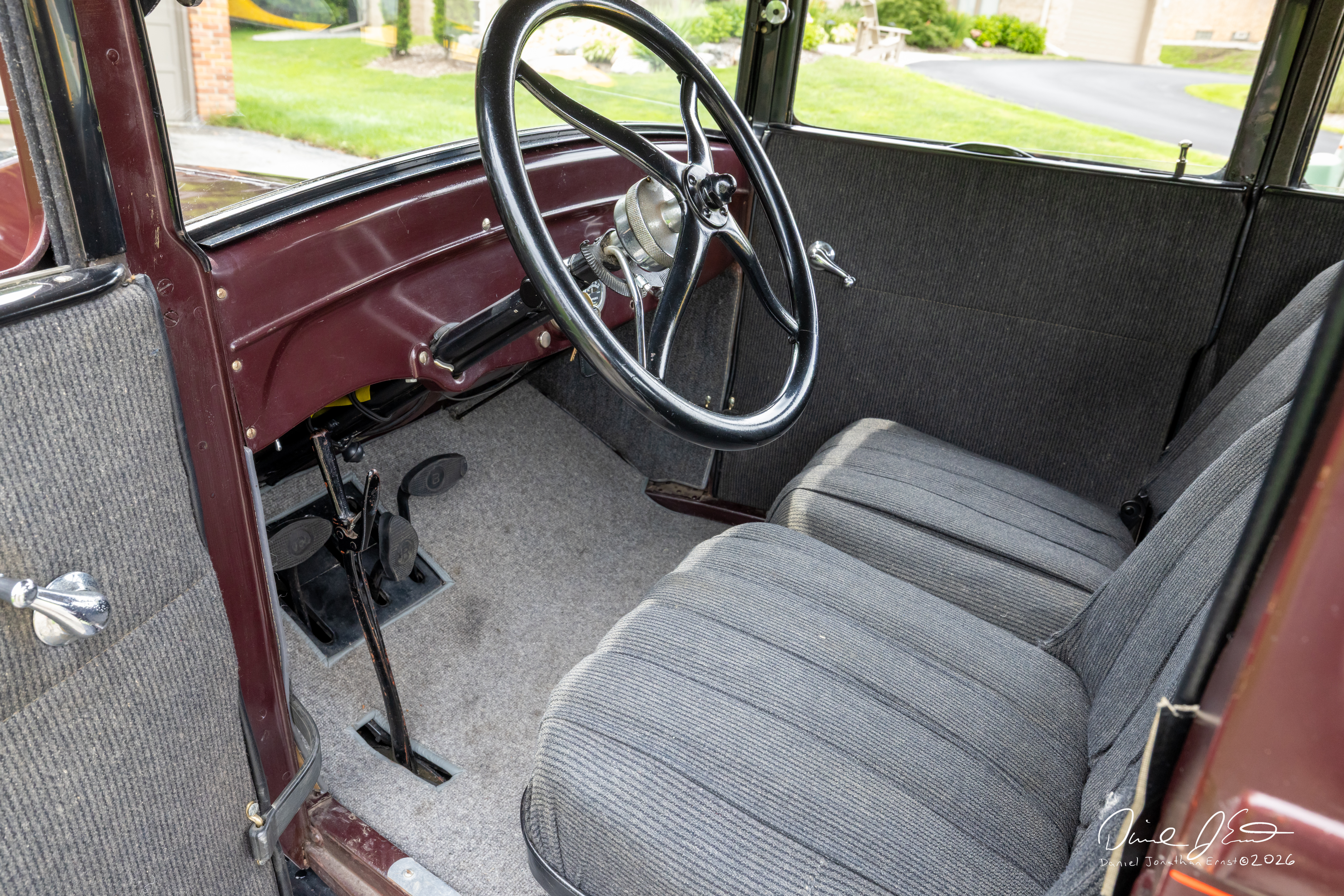
To drive forward, keep the left pedal in the neutral position while moving the parking lever fully forward. Open the throttle sufficiently while pressing on the left pedal expeditiously and firmly to get moving, reducing throttle as momentum is gained and the belt fully engages the drum. Judicious use of throttle and pedal pressure will get the car moving with a minimum of belt slipping, thus keeping belt wear to a minimum and heat from building up in the transmission. When the belt is fully engaged, keep the left pedal firmly depressed to avoid belt slipping while opening the throttle to gain sufficient forward momentum.
When ready to accelerate beyond low range, close the throttle quickly while simultaneously letting the left pedal rise to the neutral position. When done right, this avoids revving the engine by entering neutral too quickly, or slowing your momentum by entering neutral too late. When the engine RPM has wound down sufficiently, release the left pedal smoothly to couple the engine to the drive shaft. With practice, you'll do this with great timing so that at the moment of engagement, engine and drive shaft speed are roughly equal, so no jolt is felt. Then smoothly open the throttle to accelerate. It'll take a while to get to top speed. This is no race car.
Don't forget to stick your left arm out to signal turns. That turn signal lever isn't a turn signal lever, it's the spark plug timing lever.
Brakes on the 1926 Model T are relatively effective compared to earlier models. When it's time to stop, retard the throttle fully, leaving the left pedal alone, and the engine will gently brake the car, or just press the left pedal into neutral position. Press the brake pedal to apply stopping power as necessary. Before coming to a stop, press left pedal to neutral if it isn't already there.
If you've never driven anything but a modern car, the Model T provides a wealth of confusing controls; brake pedal where the gas pedal should be, low speed pedal where the clutch should be, reverse pedal where the brake pedal should be, and throttle where… well.... nothing should be. When in a panic, just press everything at once and you're bound to stall the engine or at least slow the car considerably. Don't count on your airbags or seatbelts to save you; there are none. Good thing this car tops out at around 40MPH.
Daily Maintenance & Starting
Before starting each day, check engine and transmission oil level by climbing under the car and briefly opening the upper oil pet cock to see if oil drips out. Check coolant level in the radiator. Using an oil can, oil the spindles, sockets and springs in eight places in front and two in back. Check the fuel level in the tank using a dip stick. Check tire pressures, and make sure there are no loose spokes while you're at it. (This assumes you've done all the other periodic maintenance some time recently).
To start the engine, position the lever in the neutral or brake position, set the "spark" lever up (to retard spark plug timing), position the gas lever part way down (to slightly open throttle), turn the key to the "battery" position, press the electric starter button on the floor with right foot while simultaneously pulling the choke lever if the engine's cold. When the engine starts to catch, open the throttle as needed, and advance the spark lever to normal (more advanced) position. And finally, turn the key to "magneto" position.
There are no gears to shift in the normal sense on a Model T. Various speeds are engaged by pressing floor pedals that tension cotton belts around drums in the transmission assembly. The left pedal is depressed to engage low speed. The middle pedal engages reverse. And the right pedal is the brake, which actually slows or stops the transmission and drive shaft, not the wheels directly. (There are drum brakes on the rear wheels, but these are only engaged with the parking brake lever). When the left pedal is released fully, this allows the engine to be directly coupled to the drive shaft. You may notice that no mention has been made of a "gas" pedal. The "gas pedal" is the lever on the right side of the steering column. It's moved with the right hand, and stays where it's set. If you let go, it doesn't coast, like a modern car will.
Photographs
Gallery